Iguanas at home. Exotics in the concrete jungle.

Iguanas are large arboreal lizards that now inhabit not only wild jungles and hot climates but also many apartments in large modern cities. Choosing such a pet is a responsible step because these lizards are accustomed to a specific warm climate, and keeping them at home should closely mimic their natural environment, otherwise, it can lead to health problems for the animal.
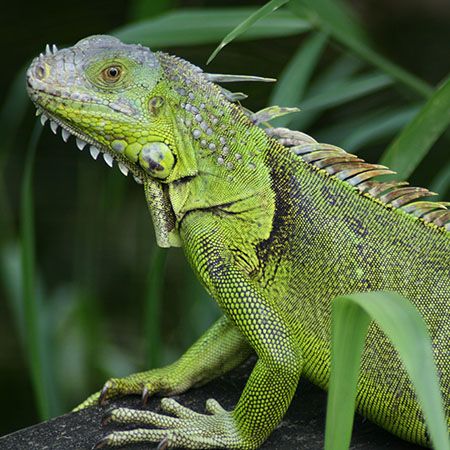 But how do you choose a healthy iguana that will live a long life and bring joy to its owners?
It’s important to inspect the lizard’s body from head to tail, ensuring there are no visible wounds, scratches, or strange dry spots (brown or yellow), which could indicate health issues, burns, or injuries.
There should be no traces of excrement on the body or its organs, as their presence indicates gastrointestinal problems.
The limbs should be symmetrical, not too thin, without bumps or scars, which might suggest fractures or injuries, and the claws should be intact.
The iguana’s tail should not appear thin or emaciated, but rather round and thick.
The lizard’s eyes should not be dull, and there should be no crusts or film, as these could signal severe dehydration or illnesses.
It’s also essential to observe the animal’s activity. A tamed iguana will not just sit still but will actively move around and attempt to crawl on your hands. However, excessive activity or aggression might indicate that the animal is not tame, and it may not be a good idea to purchase such a lizard.
Keeping an Iguana at Home
After purchasing an iguana, it is crucial to provide proper care. You should prepare a spacious terrarium made of plywood with glass walls, which will last long and also create the illusion of a wild environment. The terrarium must include a thermometer and a heating system (infrared heating lamp), as the optimal temperature for an iguana is 28-30°C during the day and no lower than 22°C at night. If the temperature exceeds 30°C or drops below 20°C, it can harm the lizard and cause health problems. It is also essential to maintain humidity levels in the terrarium, which should not fall below 80%. To achieve this, you can install a water sprayer or even a small fountain in the terrarium.
To make the lizard feel more comfortable, you can add a branch or log for the iguana to climb or rest under the heating lamp. The bottom of the terrarium should be partially filled with water (about a quarter) so that the iguana can submerge itself or rest near the water’s surface.
 What Does an Iguana Eat?
Iguanas’ diet requires special attention. In their natural habitat, lizards feed on plant-based foods, so in a home environment, their diet should closely mimic what they eat in the wild. 70% of the diet should consist of vegetables, 20% of fruits, and 10% of supplemental plant-based food. It’s best to feed the animal a variety of foods rich in vitamins and minerals.
Iguanas are not cuddly animals, which is important to consider when deciding to get this type of lizard. You won’t be able to handle it all the time. However, in situations where you do need to handle your iguana, it is important to do so correctly. Handle it carefully, avoiding scratches and ensuring you don’t damage the lizard’s claws if it is perched on a branch. It’s best to lift it gently from above, under its forearms, which will slightly limit its movement. Never lift an iguana by its tail, as it may perceive this as a threat and drop its tail.
Iguanas are very strong-willed animals with a unique temperament, making them a suitable pet only for certain people. It is important to make a responsible decision when choosing such an exotic pet.