Angelfish
 Angelfish: Features, Appearance, and Care
Angelfish, belonging to the cichlid family, are widely known as one of the most popular aquarium fish. They are admired for their remarkable grace and intriguing behavior, which can even be described as intellectual. A unique feature of angelfish is their tendency to form pairs, setting them apart from many other fish species. Experienced aquarists have observed that instances of an angelfish colliding with the tank walls after losing its companion are rare. This suggests that angelfish possess a certain level of intelligence and engage in interesting social interactions.
When kept alone or in pairs, angelfish can recognize their owners and distinguish them from strangers, showing their ability to perceive and respond to their environment. On average, angelfish live about 10 years, though exceptions exist. There are numerous types of angelfish, each with a unique and captivating appearance.
Appearance
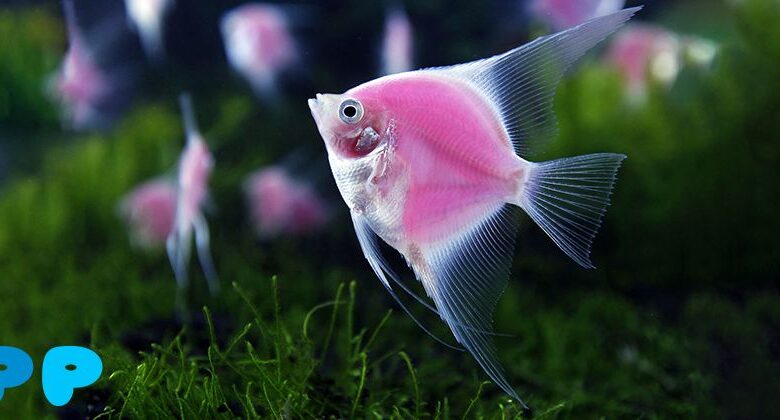
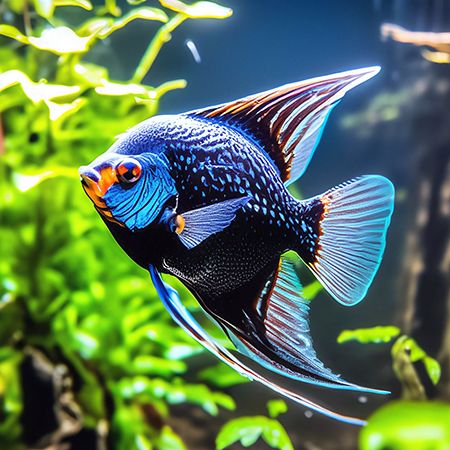
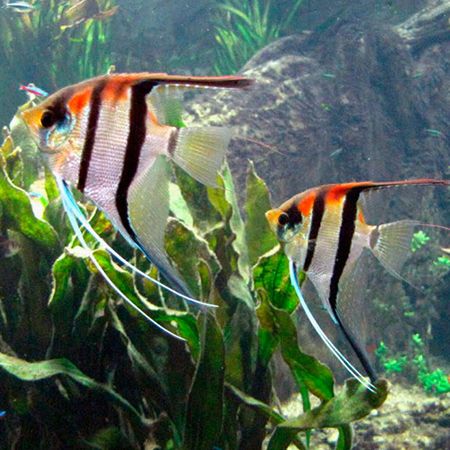
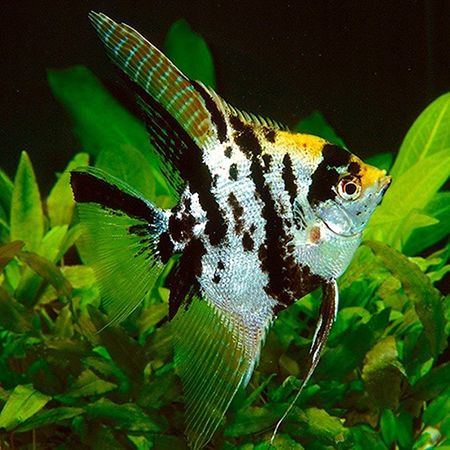
Angelfish have a diamond-shaped body that appears almost flat from the sides. Their dorsal and anal fins are elongated and triangular, resembling a crescent. Additionally, their pelvic fins are thin and thread-like. In the wild, angelfish typically have a silvery coloration adorned with several black vertical stripes. However, in captivity, they exhibit a wide variety of colors and patterns.
Notably, angelfish show little sexual dimorphism. Males are usually slightly larger than females and have a more pronounced forehead. Their sexual characteristics become more evident as the fish reach two years of age.
 Feeding Angelfish
Angelfish prefer live food and thrive on a varied diet. It is recommended to alternate between bloodworms, tubifex worms, seafood mix, shrimp, and beef heart. Occasionally, you can include flakes and plant-based food, such as lettuce leaves or spirulina-based products soaked in warm water.
Housing Angelfish
The well-being of angelfish depends on their living conditions. It is recommended to keep them in tall aquariums to provide a comfortable environment. These fish have specific water requirements, including proper filtration, aeration, and regular water changes (about 20–30% every two weeks). Providing suitable hiding spots is crucial for angelfish, as they can be shy and may occasionally need to retreat.
Planting the aquarium densely with vegetation ensures both swimming space and hiding spots. Floating plants can help angelfish feel secure. Sufficient lighting without abrupt changes in brightness is also essential. In their natural habitat, angelfish live in areas with slow-moving water and abundant vegetation. While they can tolerate temporary drops in temperature, it should not fall below 18°C (64°F).
Breeding Angelfish
Angelfish reach sexual maturity by 10 months of age and form monogamous pairs. Although breeding angelfish can be challenging, they spawn regularly under favorable aquarium conditions. Spawning can be triggered by water changes, a gradual increase in temperature, and the presence of a suitable substrate in the tank.
The female angelfish lays 400–600 eggs on broad plant leaves. Within 2–3 days, the male and female assist the fry in hatching and move them onto leaves. The fry are later transferred to a small pit in the sand, where they remain for about 4–5 days until the parents guide them in search of food. Raising fry in a community tank is particularly difficult, so separating the breeding pair into a dedicated spawning tank is recommended for successful rearing.
 Tankmates for Angelfish
Angelfish can coexist with most non-aggressive fish. Due to their natural preference for group living, it is advisable to keep 4–6 angelfish of both sexes together. However, it is best to avoid keeping them with guppies. Considering the relatively slow swimming speed of angelfish, pairing them with less active fish creates a harmonious aesthetic.
It is important to note that angelfish tend to display increased aggression during breeding periods.