Land tortoise – features of maintenance
If keeping a pet turtle was once considered exotic, it has now become quite popular. There are several reasons for this: ease of care, undemanding dietary needs, and quietness. Additionally, land turtles are smart enough to recognize their owners and communicate their needs, and they often respond to their names!
Key Points to Consider Before Getting a Turtle:
- Types of Domestic Land Turtles
- Setting Up the Terrarium
- Temperature Regulation
- Dietary and Care Requirements
 Types of Domestic Land Turtles
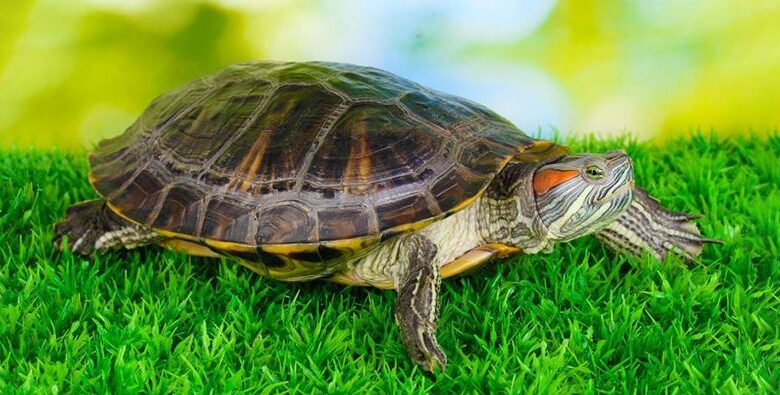
The most popular type is the Central Asian tortoise. This medium-sized tortoise reaches 25-30 cm in length and can live for 30-40 years with proper care. The American pond turtle, despite its name, thrives both in water and on land. The shell length of an adult turtle is about 27 cm, and a notable feature is the mobility of its shell plates. The star tortoise is a small reptile that grows up to 15 cm in length and can go without water and bathing. It is distinguished by its bright shell pattern, which gives it its name. The Egyptian tortoise is a small reptile (13-15 cm) with a light yellow shell bordered with dark edges. At the slightest danger, it buries itself in the sand, so the substrate in the terrarium should be dry and sandy.
Setting Up the Terrarium
Turtles are often thought to be slow creatures, but this is fundamentally incorrect. They can be very active and enjoy overcoming obstacles, so the size of the terrarium for an adult turtle should be at least 100x80x50 cm. It is best to cover the bottom of the terrarium with wood shavings rather than sand, as they are easier to clean (as they get dirty) and less likely to harm the pet. Choose medium-sized shavings so that the turtle cannot accidentally eat them with its food and is also not injured by overly large pieces of wood. The terrarium must have a hiding spot where the pet can escape from bright light, heat, or just rest.
Temperature Regulation
All land turtles originally come from regions with warm and dry climates, so it is essential to create suitable conditions for your pet. A 75W incandescent bulb, installed 30-35 cm above the terrarium surface, will help with this. During the day, the temperature should be 28-30°C, and it should be 5-6°C higher near the lamp. The terrarium should be well-lit, and if natural lighting is not possible, a daylight lamp can be used.
Dietary and Care Requirements
Turtles are herbivores, which means they need a sufficient amount of fruits, vegetables, and greens. Moreover, greens are the foundation of a turtle’s diet. Depending on the turtle’s taste preferences, suitable options include lettuce leaves, dandelions, and spinach. Fruits like apples, pears, and apricots can also be given. Strawberries or watermelon are acceptable as well. Many turtles love carrots (for young turtles, it should be grated, while adult turtles can have it finely chopped), cucumbers, and green peas. Ensure that all foods are fresh, as this will protect the pet from parasites and kidney diseases.
Land turtles do not drink water, but they cannot live completely without it, so they need to be bathed every 1-2 weeks. This can be done using a shallow dish filled with slightly warm water, ensuring it reaches the turtle’s neck, and leaving the turtle in this mini-pool for 20-30 minutes. It is not advisable to bathe the turtle under running water. After bathing, the reptile should be thoroughly dried with a paper towel to prevent catching a cold, even from a slight draft.
In the wild, turtles often hibernate during the winter due to a drop in temperature and insufficient food supply. However, this may not happen indoors.
Overall, turtles are very undemanding and make excellent pets for people who do not have much free time. The main thing is to remember your pet and interact with it. Turtles are fascinating creatures that can bring a lot of positive emotions!