Degu Squirrel — Key Facts About the Rodent

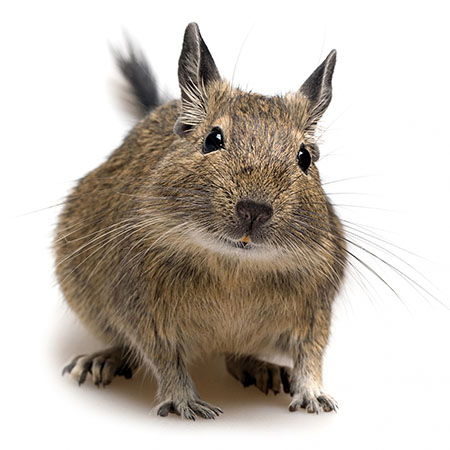
The Degu Squirrel is a small, active rodent. Its appearance somewhat resembles a combination of a rat and a chinchilla. If you’re looking for the best companion among rodents, it’s definitely worth getting to know the degu better. These little animals love company—both human and of their own kind. They are easy to care for and make wonderful pets to observe.
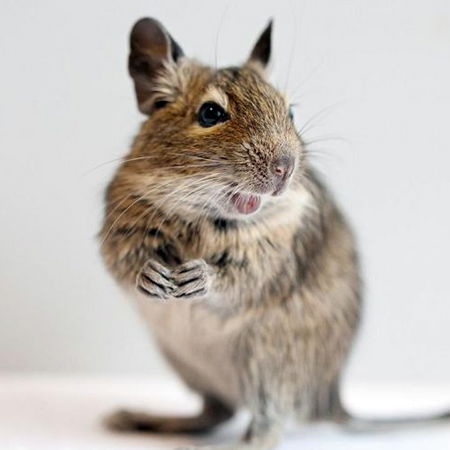 Where did the degu come from?
A close relative of the wild rodent is the mountain-dwelling Coendou, which inhabits the rocky areas of the Andes. It weighs around 300 grams and is a very agile and jumpy animal. In the wild, these rodents live in herds, which is important for animals that prefer such a lifestyle.
Not only does the degu love company, but it also needs it. For both the animal and the owner, it’s best to have at least two individuals. If breeding is not in the plans, two males or two females can share a cage, as they usually get along well without competing with others of the same gender. Having at least two allows you to observe their wonderful social behavior—playing together or snuggling with each other.
The Degu Squirrel at Home—What Kind of Cage is Needed?
Although it’s a small rodent, due to its high need for physical activity, it requires a large cage—at least 50 x 100 cm and 40 cm tall. This size is suitable for both a single degu or a pair. As mentioned earlier, these animals will feel much better when sharing space with another of their kind.
The cage should be equipped with toys for active play—tunnels, houses, footbridges, or hammocks. Since their teeth need constant wearing down, the cage should include items to chew on, such as a wooden log or a thick stick. Among the most popular toys is a running wheel. Is the wheel a good option for rodents? Yes, as long as it’s a safe wheel. Firstly, it must be large enough so the degu doesn’t arch its back too much. Secondly, it should have a solid surface since their feet can slip through bars. The entry and exit from the wheel should also be safe—avoid those with a “scissor effect.”
Degus should have an exercise wheel with a solid surface in their cage. You can also add thick branches for climbing and chewing. Thick cotton ropes can be used as climbing toys. A heavy ceramic bowl is ideal, as it cannot be chewed through. Use a water bottle with a spout, but ensure that the degu always has access to clean, fresh water.
 Degu Baths—How Do Degu Squirrels Bathe?
Like chinchillas, degus need regular dust baths to keep their skin and fur in good condition. Several times a week, place a shallow bowl with some chinchilla dust in the cage (leave it for about 30 minutes or longer, so they have enough time to roll around). Water baths are generally unnecessary.
How Long Do Degus Live and What Are Their Most Common Health Problems?
Degus are not prone to many illnesses, but there are diseases they are particularly susceptible to, often due to improper diet—like the aforementioned diabetes. Their psychological well-being is also important—they do not tolerate loneliness well. A bored and lonely degu may start biting its tail or pulling out its fur. With proper care and feeding, degus live around 7-8 years.