Pet – Yemeni chameleon
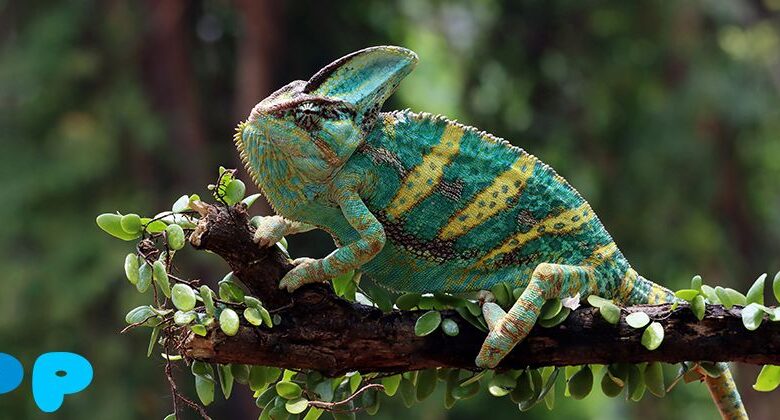
Chameleons are fascinating and mysterious creatures, and breeding them is a relatively recent hobby. Despite this, more and more breeders are starting to raise Yemeni chameleons. This species has gained special popularity in post-Soviet countries due to its relatively low cost. It was first introduced from the Arabian Peninsula, specifically from Yemen.
 Features of Keeping a Yemeni Chameleon
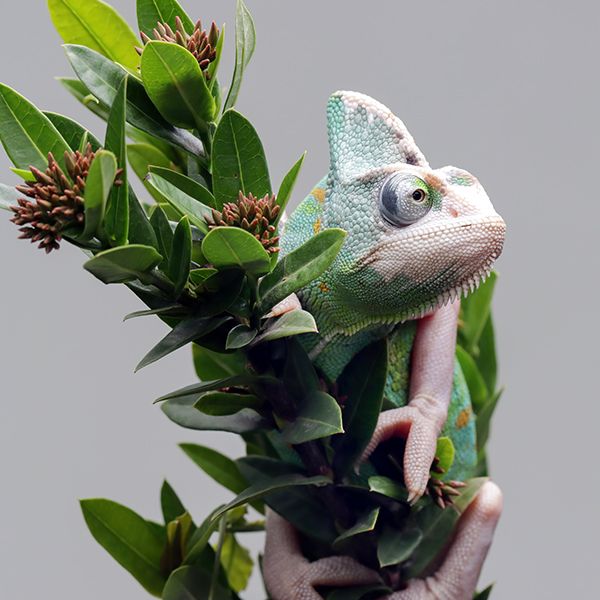
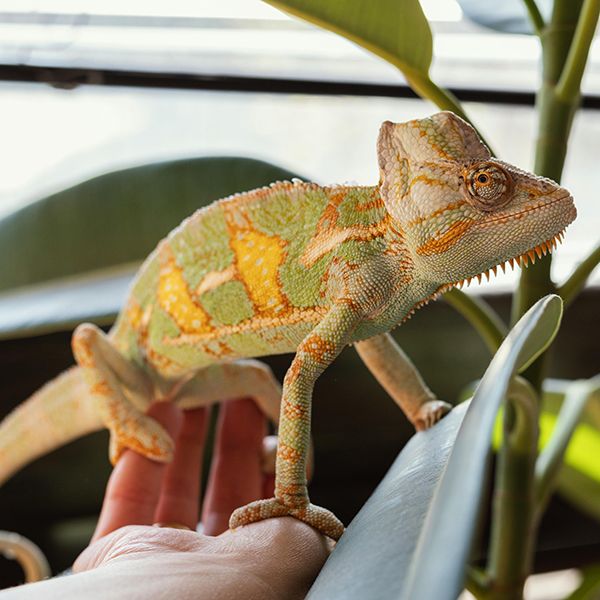
Male chameleons can be identified by the tall crest on their heads, also known as a “helmet,” which can reach up to 10 cm in height. In females, this crest is only vaguely defined. The coloring of chameleons is quite interesting as well: as expected, males have brighter colors. The green body of the male is adorned with three vivid yellow stripes on each side, bordered with brown. The long, gripping, scaly tail is completely covered with alternating stripes, and small triangular spurs can be found on the back of the legs, just above the shins.
Yemeni chameleons live between five and seven years in captivity, although there are documented cases of some individuals living up to 10 years. With proper care, achieving this lifespan is possible.
When bringing any pet into your home, it’s important to understand the commitment to providing proper care. For chameleons, the living conditions are crucial. If these are not met, health problems can arise. First, prepare a vertical terrarium at least 80x70x50 mm in size. The terrarium should have ventilation at the bottom and top. It’s recommended to cover the openings with a mesh to prevent the animal from escaping or getting stuck. Lighting is also essential because Yemeni chameleons require vitamin D3, which is absorbed only under ultraviolet light. This is related to their rapid growth, so daylight lamps are ideal. The lamp should be positioned so that the light shines directly, as the terrarium walls should not block the ultraviolet rays from reaching the chameleon’s skin.
Temperature Requirements for Keeping Chameleons in the Terrarium
Chameleons should be kept at a temperature between 20°C and 30°C as they are warm-blooded animals. You can use powerful incandescent lamps, special heating mats, or heating cables for this purpose. Keep in mind that chameleons sleep at night, so you will need to turn off the lamp to avoid disturbing their rest. A small fountain should be installed in the terrarium, which will serve both as decoration and a water source for the chameleon, as they are not attracted to still water from regular bowls.
It’s also important to set up a toilet area. Chameleons are quite clean creatures and tend to relieve themselves in a specific spot. You should place a container with a wide neck to serve as the toilet.
Once these preparations are made, you can introduce your chosen chameleon to its new home.
 What to Feed a Chameleon
Chameleons are naturally predators that feed on insects, small vertebrates, and invertebrates. They can also nibble on grass, leaves, and juicy stems. It’s essential to know that 70% to 90% of their diet should consist of animal-based food, with the remainder made up of plant-based foods such as bananas, berries, stems, and leaves of lettuce or dandelions. In captivity, chameleons eat insects like crickets, cockroaches, grasshoppers, locusts, mealworms, and Zophobas. The food should be placed in a feeder that is secured to prevent the chameleon from tipping it over. Before feeding the insects to the chameleon, they should be treated with vitamins to meet the chameleon’s nutritional needs. Adult males can occasionally be treated to a couple of mice, and females to small lizards.
How to Breed Chameleons
When it comes to mating, Yemeni chameleons are very easygoing. They get along well with almost any female. During the mating season, the male performs a courtship ritual by rhythmically nodding and nudging the female’s body and head. After a few days, the female accepts, and mating occurs. Afterward, the female changes her color to signal other males that she is already carrying eggs and should not be approached.
The female remains pregnant for about a month and requires plenty of water during this time, sometimes even needing to be fed from a pipette. When she is ready to lay eggs, she starts moving frantically around the cage, searching for a suitable spot. At this point, it’s necessary to prepare and place a container about 400x200x200 mm in the terrarium, filled with vermiculite. The female will dig tunnels and lay a large number of eggs—up to 100, which will need to be moved to a separate incubator.