Grammostola rosea red – house spider. Chilean rose tarantula features.
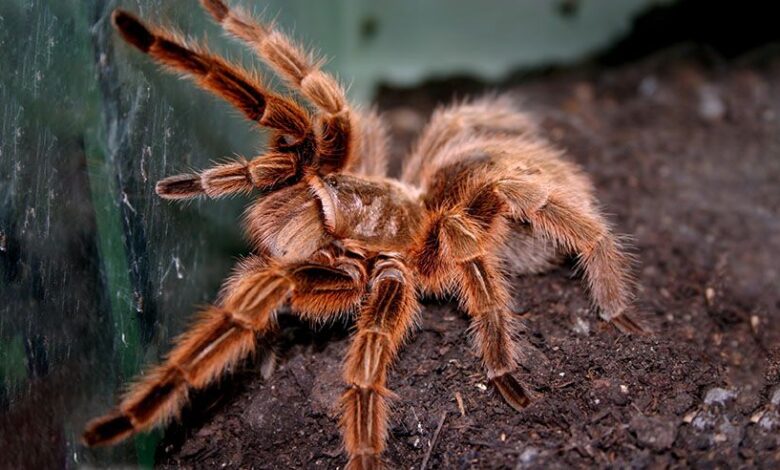
Recently, the breeding and keeping of various spider species at home have gained popularity among exotic pet enthusiasts. One such species is the Grammostola rosea red. In the wild, these spiders inhabit South America. In their natural environment, they dig burrows where they spend most of their time. These tarantulas are ideal for beginners because Grammostola rosea spiders have a very calm temperament, and their venom is completely harmless to humans. Unlike the regular Grammostola rosea, the red subspecies features a vibrant color with a copper hue.
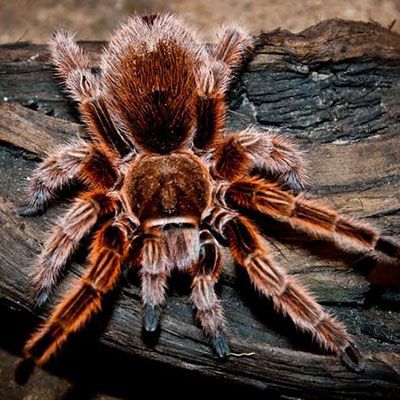 Characteristics of Grammostola rosea red
Compared to other tarantula species, Grammostola rosea red is not very large. Adult specimens reach a body length of 5–7 cm, with a leg span of 15–16 cm. Males reach their maximum size at about 2–3 years of age, while females do so in 3–5 years. Lifespan also depends on gender: males live 5–6 years, while females, under favorable conditions, can live over 20 years. Grammostola rosea red does not have strong venom; for humans, it is completely safe, except for those who may experience an allergic reaction similar to that caused by bee or wasp stings. These spiders are non-aggressive and slow-moving, making them ideal for beginners as a first tarantula for gaining experience in caring for such an unusual pet. In captivity, they like to hide in shelters and sometimes dig burrows. They may occasionally refuse food for long periods, up to several months, without any harm to their health.
Housing in Domestic Conditions
In the wild, Grammostola spiders live in areas where the temperature fluctuates between +40 to +10 degrees Celsius throughout the year, with humidity levels ranging from 40% to 60%. Therefore, room temperature is perfect for them, and no additional heating devices are required. However, they need extra humidity about every 10–15 days. For a terrarium, glass enclosures measuring 30x30x30 cm are commonly used. Plastic containers, including DIY ones, also work well. The terrarium should not be too tall because these spiders like to climb walls and often fall, so it’s essential to ensure that the bottom is free of sharp objects that could injure the spider. A coconut substrate is often used as bedding since it retains moisture for a long time and looks natural. The terrarium must have a small water dish, and you can decorate it with coconut shells, small driftwood, or decorative figures without sharp elements.
Feeding Grammostola rosea red
You should feed your tarantula no more than twice a week. The spider will never overeat, so it’s impossible to overfeed it. Grammostola rosea feeds well on feeder insects like crickets or cockroaches (Turkmen, marble, Argentine). An adult spider can easily eat an insect the size of its body (excluding legs). Larvae of the Zophobas beetle are also often used as food. During molting, spiders may refuse to eat for a while. This usually starts about a month before molting and lasts 1–2 weeks afterward, depending on the spider’s age. Grammostola rosea red can survive without food for up to 12 months.
 Breeding
To breed tarantulas at home, you need to follow certain rules. Female Grammostola rosea red, like many other spider species, may eat the males after mating, so it’s important to move the male to a separate terrarium in time. After mating, you need to lower the temperature in the female’s terrarium by 3–4 degrees and gradually increase it. This should prompt the female to start spinning a cocoon. The entire process from mating to cocoon spinning takes about three months. Then, over the next two months, larvae develop in the cocoon. Six months after mating, around 300 small spiderlings emerge. Caring for tarantulas doesn’t require much effort, and observing the life of a small, fluffy friend is incredibly fascinating!