Rainbowfish: Characteristics, Care, and Recommendations
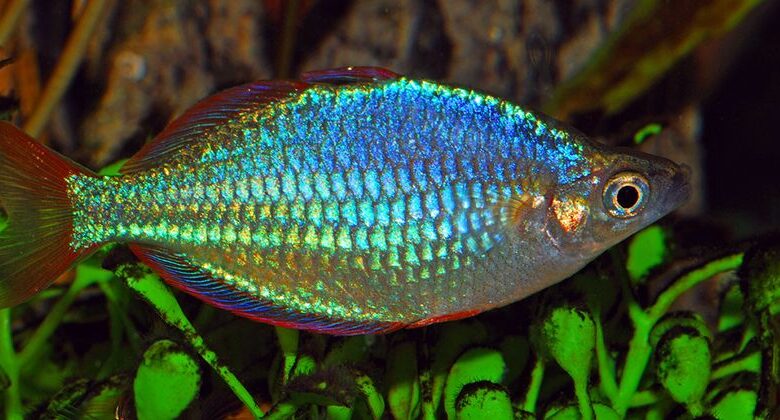
Rainbowfish or Boesemani Rainbowfish is one of the most attractive and beloved species among aquarists. Moreover, they are active and peaceful, making them compatible with other decorative organisms. Although caring for them is not difficult, monitoring water quality is crucial, which is the most challenging aspect of their care.
 Characteristics of Rainbowfish
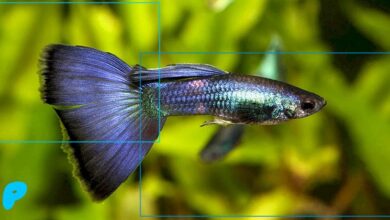
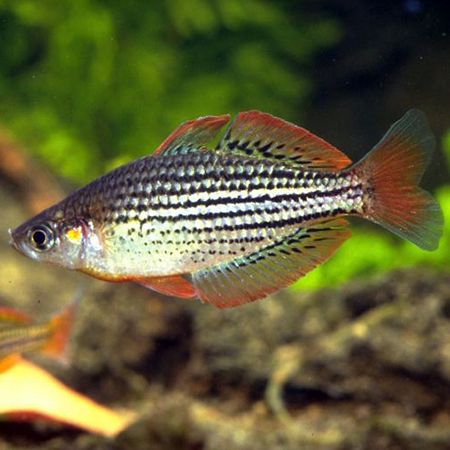
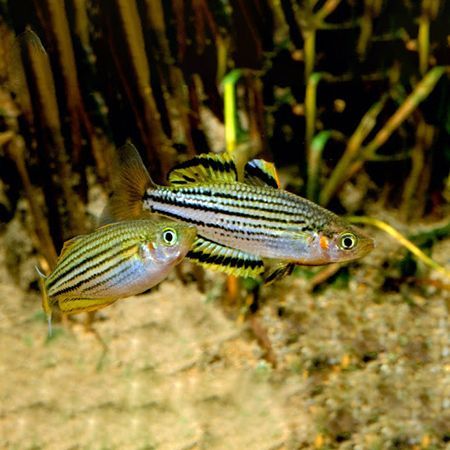
This species has very poorly developed fins and a smaller size. Their coloration is one of their most remarkable qualities, as it fully matches their name. The body displays blue, turquoise, or purple flashes in the front half, followed by yellow, orange, and some red hues. Among the entire Melanotaeniidae family, rainbowfish are considered the most colorful. The colors of the rainbowfish can reflect the animal’s health. If the fish is in poor condition, its colors will become duller. When water parameters are stable, the reproductive period begins.
Sexual Dimorphism
Females have duller shades than males.
Natural Habitat of the Rainbowfish
This rainbowfish is found in Lake Ajamaru and Aitinjo (in West Papua), although there are other species in the family inhabiting northern Australia and parts of New Guinea. Due to their easy adaptation to environmental conditions, there are concerns that they could invade other ecosystems worldwide.
Caring for Rainbowfish in an Aquarium
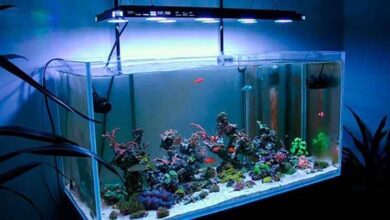
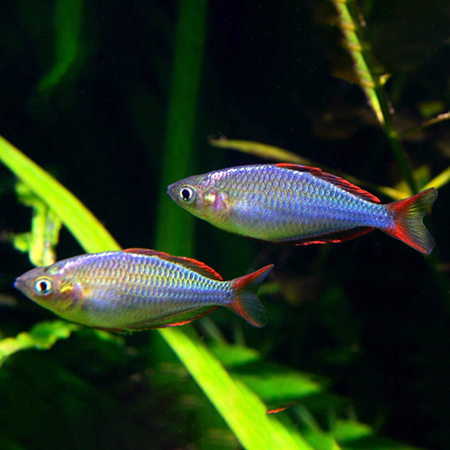
Rainbowfish require an aquarium of at least 200 liters with crystal clear freshwater, plenty of vegetation, and a pH level of around 8.0. Keep in mind that one of the most challenging processes for your fish will be adapting to its new home. Providing rocks or hiding spots will help keep the fish calm. Since they are a schooling species, it’s recommended to keep 6 to 8 individuals. Additionally, they are generally good companions for peaceful animals, so they can be added to a community aquarium. Before mixing them with other species, remember that rainbowfish thrive in slightly alkaline water, so ensure that other fish can tolerate similar conditions.
Water Parameters
Although they are easy to care for, these fish require specific water conditions, which is considered the most challenging aspect of their care. Therefore, it’s important to carefully follow these parameters:
- Temperature: 26 to 28°C (79 to 82°F)
- pH: 6-8 (optimal range: 7-8)
- Hardness: 10-20 °H
- Water changes: at least 25% weekly (this species requires a filter in the aquarium).
 Helping Rainbowfish Adapt to Aquarium Life
If you’re setting up an aquarium for the first time, it’s important to properly cycle it. Set up all your equipment and run it to stabilize the environment and create a functional mini-ecosystem. To speed up the process, some food is usually added to the tank, and it is left for several weeks to allow the cycling process to complete. It typically takes a month for the aquarium parameters to stabilize.
Before introducing your fish to the aquarium, it’s necessary to acclimate them to prevent stress-related illness. To do this, the bag or container they were transported in is submerged in the prepared tank to equalize the temperature. Then, the water in the container is slowly and continuously mixed with the tank water to homogenize both environments.
These processes are time-consuming and require patience, but they help your new pet better adapt to its new home and enjoy a healthy life. Remember, one of the factors affecting fish health is stress: the more you care about this, the better the rainbowfish’s immune system will respond.
Rainbowfish Diet
In their natural habitat, these fish are omnivores, feeding on a variety of foods. Therefore, in captivity, they pose no difficulties, as they can be maintained on a diet of processed flakes (pellets) or live food. In fact, the shape of their mouth has a slight upward curve, allowing them to feed easily from the surface.
Due to the variety of commercial foods containing everything they need nutritionally, it’s best to offer your pet both types: live and processed. Additionally, rainbowfish are demanding when it comes to feeding, and should be fed 2 to 3 times a day.
Breeding Rainbowfish
Breeding this species is not difficult, as it doesn’t require specific care. In fact, most specimens sold come from specialized farms. Due to their popularity and relatively low maintenance costs, they have become a favorite among aquarists.
Mating Ritual
The male performs his courtship with a “dance,” trying to attract the female. During this, he swims alternately from left to right, in a slow movement much like a waltz. Finally, the male taps the female 4–9 times, and if she agrees, spawning and fertilization begin.
Laying Eggs and Hatching
These fish are egg layers, meaning they lay their eggs directly on plant leaves, where they await fertilization. Since they have external fertilization, the male completes the process by releasing sperm over the eggs. These fish lay between 19 and 56 eggs at a time, and while they can spawn at any time, they prefer the early hours of the day. In fact, this species has no specific breeding season, so it can occur at any time of the year if they have the right food and conditions.
The eggs hatch within 5-14 days after laying, depending on the water temperature. At higher temperatures, the fry hatch sooner, while lower temperatures delay hatching. Like the adults, feeding the young must be balanced between processed and live food.
 Recommendation
If you want to experience breeding your rainbowfish, it’s recommended to do so under the guidance of a specialist. Although it may seem simple, young fish require careful and consistent care, which can be life-threatening if neglected. One of the best strategies is to keep them in a separate pond or aquarium to care for them properly, without affecting the adults.
Rainbowfish are considered an endangered species due to their declining natural population. However, they have proven easy to breed in captivity, so their survival in artificial environments is guaranteed.
This may not be the best way to save the species, but it is better than facing their extinction. Additionally, you must be aware of the responsibility you carry for this pet, as they will depend on you for their entire life. However, if you follow all the recommendations and seek advice from specialists, you will have no problems caring for your rainbowfish.