Interesting Dog Breeds with Short Legs
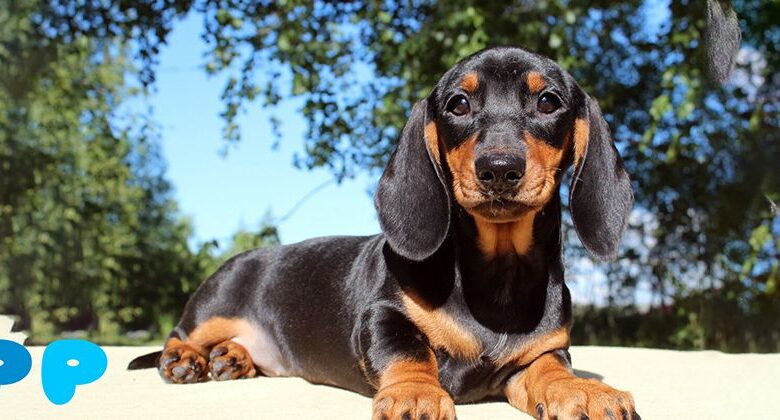
There are certain dog breeds that display a disproportion between body and limbs, resulting in unusually short legs. This disproportionate dwarfism is due to genetic mutations that occurred over a very long period. From ongoing studies, it appears these breeds have a specific protein deficiency that regulates limb growth, meaning their legs do not proportionally elongate as the rest of their body develops. Short-legged dogs are lively, energetic, active, and skillful in everything. The main issue associated with this trait is the strain it places on their spine, which can lead to disorders such as osteochondrosis, intervertebral disc herniation, and vertebral injuries.

Welsh Corgi
There are two types of Welsh Corgis, very similar in appearance, distinguished by coat color and small details. This English breed falls into the first group of herding dogs according to the International Canine Federation (FCI). The Pembroke is more common and has even been present at the court of England’s King George VI.
Morphology: The fox-like head with a pointed muzzle is distinctive. The ears are long, pointed, with rounded tips, and the limbs are short, with large, round feet. The Pembroke has a short tail, while the Cardigan’s is long and bushy. The coat is neither soft nor bristly, in tawny or black with white patches on the limbs. Welsh Corgis reach a height of about 30 cm (12 inches) at the withers, with weights from 10 to 15 kg (22-33 lbs).
Temperament: They are lively but affectionate. The Cardigan tends to be shyer, while the Pembroke is more outgoing. Both are well-balanced and intelligent, and also good with children. They are, however, known for frequent and loud barking.
Care: They need encouragement to exercise, as they are slightly lazy despite their lively nature. A balanced diet is crucial to prevent weight issues. Their lifespan ranges from 12 to 14 years.
Dachshund
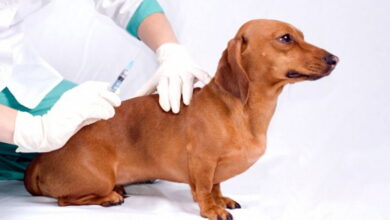
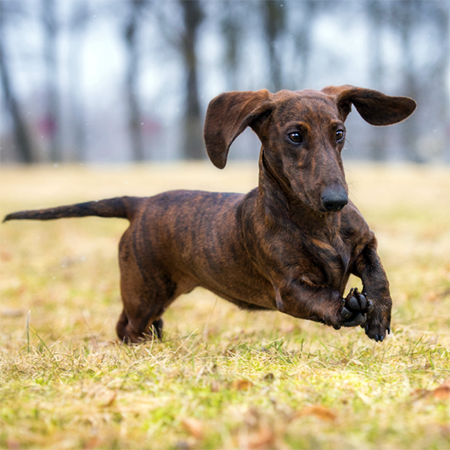
The Dachshund has German origins, though some traces go back to ancient Egypt. Widely popular in Bavaria, the Dachshund is instantly recognizable for its elongated body and short legs. There are nine types based on size (standard, miniature, and kaninchen) and coat type (long, short, and wiry).
Morphology: Long body, short legs, flat skull, pointed muzzle, dark eyes, and drooping ears. Their size is measured by chest circumference rather than at the withers: 30 cm (12 in) for kaninchen, 35 cm (14 in) for miniatures, and over 35 cm for standards. Coats vary in color and pattern, with black and tan, and brown being common.
Temperament: Dachshunds are obedient, intelligent, and affectionate, but as hunting dogs, they can display strong prey drive when they spot potential quarry.
Care: Care should be taken with food intake to avoid obesity, and to prevent activities that strain the back.
Basset Hound
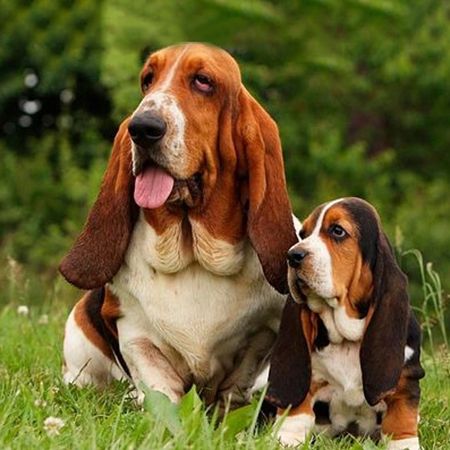
This charming breed originated in France, although both the UK and the U.S. lay claim to it. Basset Hounds are famous for their keen sense of smell and their low, sturdy build, making them great for trailing game.
Morphology: Basset Hounds are strikingly disproportionate, weighing up to 30 kg (66 lbs) with a height of only 38 cm (15 in) at the shoulders. They have long, floppy ears, a slender muzzle, and short, smooth coats that can be black, white, and fawn.
Temperament: Known for their gentle, affectionate, and playful disposition, they are ideal for families with children. They are deeply attached to their owners and enjoy shared spaces and activities.
Care: They are resilient with a lifespan of up to 12 years but may suffer from health problems, including knee dislocation, retinal atrophy, elbow dysplasia, glaucoma, hypothyroidism, and spinal disc issues.
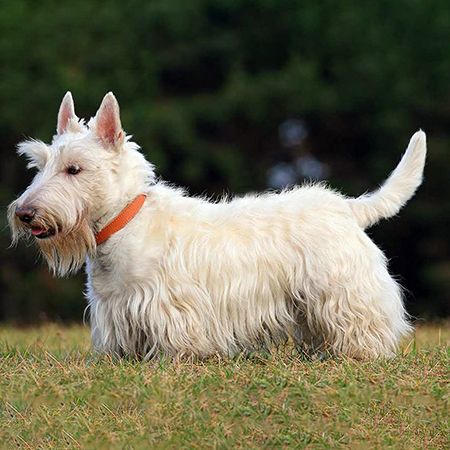
Scottish Terrier
As the name suggests, this short-legged dog hails from Scotland and is known for its lively and tenacious nature.
Morphology: The Scottish Terrier is noted for its long, wiry beard and mustache. Their coat is dense, longer on the brows and muzzle, often in dark gray. They have straight, pointed ears and a tail that stands erect.
Temperament: Scotties are independent, strong-willed dogs, yet they form deep bonds with their families. They are courageous, territorial, and inclined to frequent barking and digging.
Care: Their coat requires specific maintenance a few times a year, including stripping and trimming. Unfortunately, this breed has a high incidence of cancer, so promoting a healthy lifestyle with balanced diet and activity is essential.