Miniature Schnauzer. Breed Description
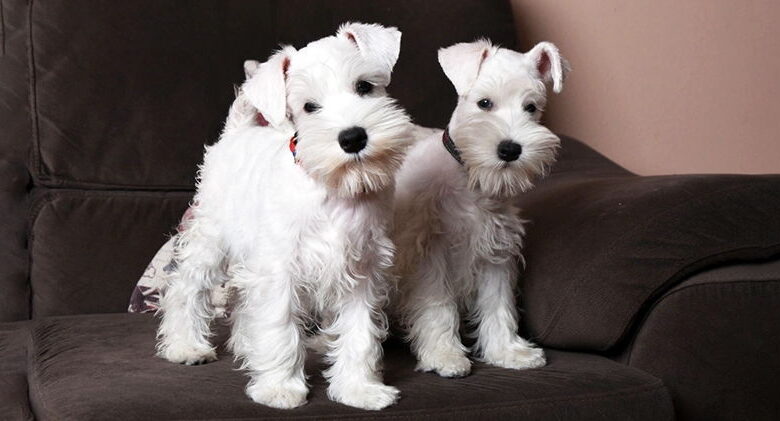
The Miniature Schnauzer is an intelligent dog originally from Germany. They are the smallest of the three Schnauzer breeds, and the latest addition to this charming breed family. Since they first appeared at a dog show, they have become one of the most popular Schnauzers due to their size, adorable appearance, and loyal, friendly nature. Miniature Schnauzers easily adapt to various environments and are just as happy in an apartment as in a countryside home, provided they receive mental stimulation and daily exercise. Always alert and eager to please, Schnauzers are beloved by all.
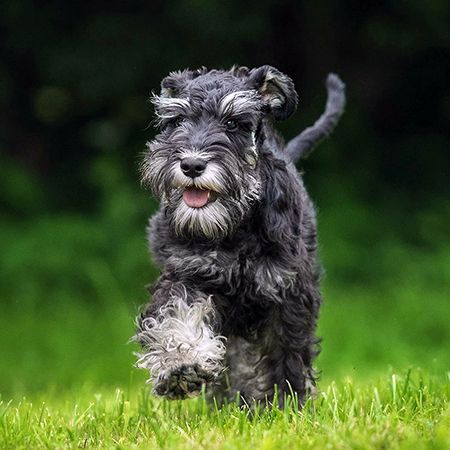 Advantages of the Miniature Schnauzer:
- Extremely intelligent
- Affectionate and loyal by nature
- Low-shedding
- Very playful and active into old age
- Great with children of all ages
- Make excellent guard dogs
- Get along well with other dogs and cats they grow up with
- Thrive as household pets
Disadvantages of the Miniature Schnauzer:
- They love to bark
- Prone to dry skin and allergies, requiring regular coat care
- They may have various health issues, resulting in potentially high vet bills
- Strong-willed and stubborn
- Suffer when left alone
- May become aggressive if not socialized early
Breed Origins
The true origins of the Miniature Schnauzer are unclear, although it’s considered an ancient breed with history dating back to the 15th century. Similar dogs can be seen in artwork from that period. In Germany, they were highly valued for their loyal temperament and the ability to distinguish friend from foe, making them ideal watchdogs. Known for their excellent rat-catching skills, Schnauzers were popular among both rural and urban dwellers.
Some enthusiasts believe that breeders created the Miniature Schnauzer by selecting only the smallest Standard Schnauzers, while others think the breed arose from crosses between the Standard Schnauzer and small breeds like the Affenpinscher. The first Miniature Schnauzer was shown in 1899, instantly charming the audience with its size and looks.
 Interestingly, the breed name originated from a dog named Schnauzer, who won the 1879 Hanover Exhibition. The term “Pinscher” was used after the establishment of the first breed club in Cologne in 1895, and included both rough-coated Schnauzers and smooth-coated Pinschers. Around 15 years later, a standard for short-haired dogs was developed, laying the groundwork for several German breeds. The Miniature Schnauzer was officially recognized in Germany in 1899 and was introduced to America in the mid-1920s. In 1901, the Bavarian Schnauzer Club was founded and merged with the Pinscher Club in 1918, becoming the Pinscher-Schnauzer Club.
Physical Characteristics
- Height: Males and females – 30-36 cm
- Weight: Males – 5.4 to 8.1 kg; Females – 5.4 to 8.2 kg
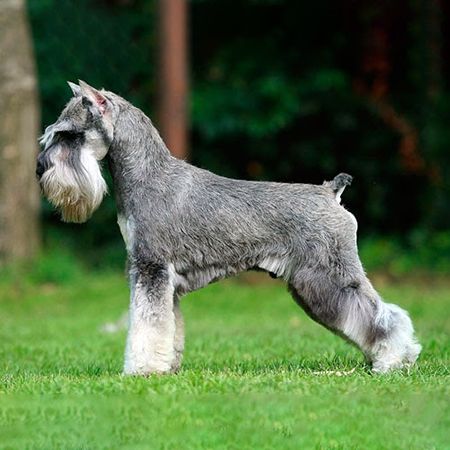
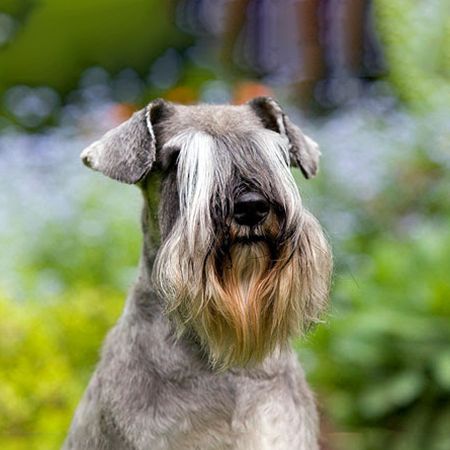
The Miniature Schnauzer is a charming dog with thick eyebrows and a mustache. They are compact, sporty, and have a proportional head with a flat forehead and muscular cheeks. The eyes are dark and oval, and their V-shaped ears sit high on the head and fall forward. Miniature Schnauzers have a strong jaw with a perfect scissor bite and a moderately long neck. They have a deep, moderately broad chest and a straight back, which is higher at the shoulders than at the rump. Their coat is rough, short, with a soft undercoat.
Acceptable Colors for Registration:
- Black
- Black and Silver
- Salt and Pepper
- White
Temperament
Miniature Schnauzers are intelligent, lively dogs comfortable in home environments. However, they have a stubborn side, so early socialization and training are essential to establish who’s in charge. They are alert and notify their owners of strangers or anything they find displeasing. Though reserved with strangers, they rarely show aggression, preferring to keep their distance and bark.
 Adaptability and Personality Traits
Miniature Schnauzers are adaptable and can thrive in apartments or houses with a yard, provided they get enough exercise and mental stimulation. They are naturally playful and enjoy interactive games, excelling in activities like agility. They have a deep attachment to their owners and can experience separation anxiety, developing unwanted behaviors when left alone. Known for their loud bark, they alert owners of any unusual activity, making them great watchdogs without aggression.