Caring for an Iguana at Home
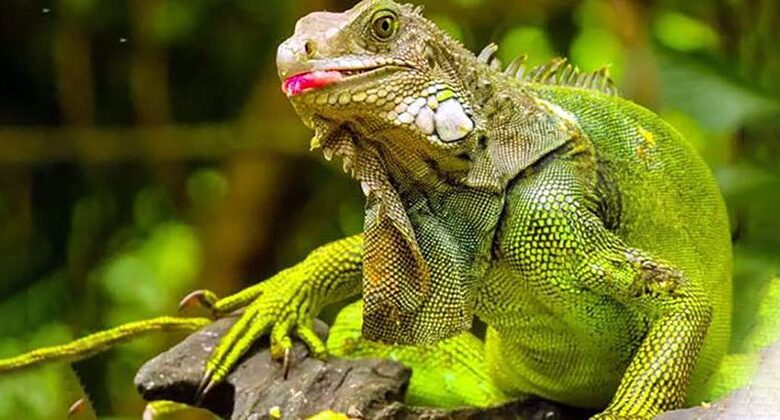
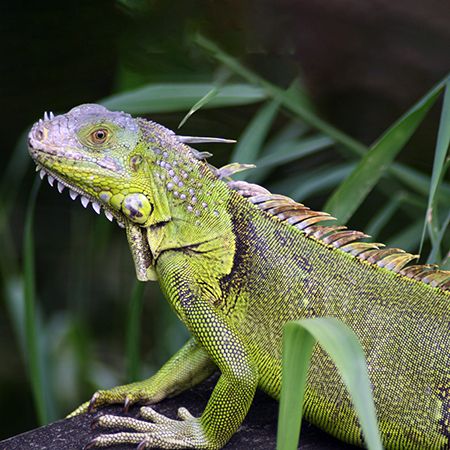
Iguanas are cold-blooded reptiles. They are not easy to care for, and unfortunately, it’s common to see them die in captivity. You shouldn’t buy an iguana without careful consideration. These animals require costly care. Owners must provide warmth and light, appropriate food, and enough space for them to grow to their natural size—between 1.20 and 1.80 meters. Before purchasing such a demanding pet, a person must ensure that they can afford the significant expenses needed to keep the iguana healthy. It is a long-term investment that requires effort and resources.
 Caring for an Iguana at Home
Iguanas need a specific amount of light to absorb UVB and UVA rays. UVA rays help them feel good and typically support reptiles in responding well to their diet. UVB helps the iguana digest food and absorb vitamin D, which is essential for calcium absorption to prevent bone diseases.
There are lamps that replicate sunlight, which is the best source of UVA. You should purchase fluorescent lamps from pet stores or specialty shops to provide UVB for your pet. To maintain the iguana’s health, UVB lamps must be replaced every ten to twelve months.
Temperature control is also crucial. Iguanas come from Central or South America and are not accustomed to low temperatures. The daily temperature should range from 26 to 32°C. After setting up the lamp, observe the iguana to ensure its comfort. If it constantly stays under the lamp, it may need more warmth. Nighttime temperatures should never drop below 24°C, while daytime temperatures should be between 30°C and 35°C, with a maximum of 36/37°C. Iguanas should never come into direct contact with the lamp, as it could burn them. Heated terrarium rocks, while aesthetically pleasing, can be dangerous and should be avoided.
Iguana Terrarium
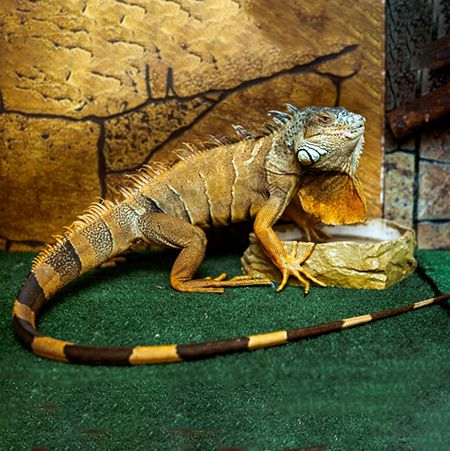
Iguanas need a large terrarium. The ones sold in pet stores are not big enough, even for a young iguana. A good terrarium should be at least 90 cm deep, 1.8 m wide, and 1.8 m high. This will provide enough space for an adult iguana to move around comfortably.
You should also include branches, as iguanas love to climb. To control humidity levels, consider purchasing a humidifier. When setting up or buying a terrarium, remember that iguanas grow quickly.
Iguanas are herbivores and need a diet rich in leafy greens to stay healthy. It’s often recommended to feed them kale, mustard greens, alfalfa, dandelion greens, or watercress. They don’t eat iceberg lettuce, as it has little nutritional value. You can also offer yucca, parsnips, papaya, okra, mango, green beans, or squash, but citrus fruits must be avoided at all costs, as iguanas cannot tolerate their acidity. Treats may include dahlias, hibiscus, grapes, strawberries, raspberries, or whole wheat bread. However, iguanas should not overeat.
Iguanas need a constant source of fresh water. It’s important to replace the water regularly to prevent illness.
 Territorial Nature and Health Concerns
Iguanas are naturally territorial and usually only come together for mating. If you keep two or more reptiles in the same terrarium, they can become aggressive and may fight and injure each other. They can also spread diseases. One common issue is mouth rot, which may develop due to infection. The iguana will stop eating because of the infection.
Mouth rot can be caused by bacteria, viruses, or parasites, and it can also occur if the terrarium’s humidity or temperature is incorrect, if the iguana has a poor diet, or if it suffers from a bacterial infection. Signs of infection, such as cottage cheese-like pus or swelling of the jaw, indicate that the iguana is likely infected. It’s crucial to bring the pet to a vet before the disease progresses too far, as it could be too late to save it. Doing thorough research and properly setting up the terrarium before purchasing an iguana is highly recommended.