How many fish can be kept in an aquarium?
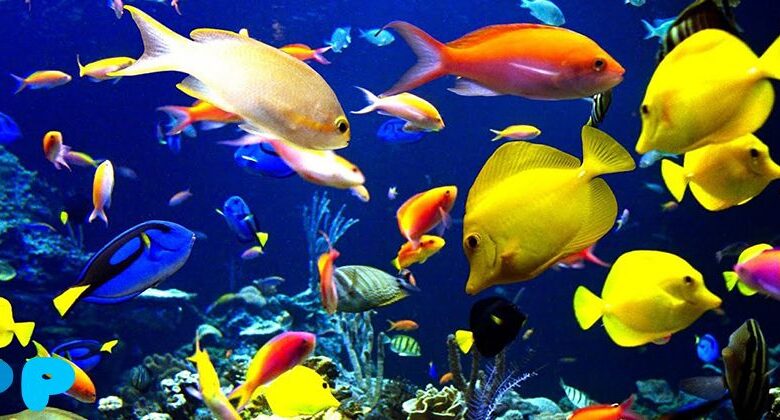
Almost every aquarium owner, while looking into their tank, has wondered how many fish they can put in it. Aquariums don’t come with calculators or stocking charts, so many owners unknowingly overload their tanks, sometimes leading to disaster. So how can an aquarium owner know how many fish they can safely keep? Several factors and methods of calculation need to be considered to determine the safe number of fish.
 “1 liter per 1 cm” – why is this a flawed rule of thumb?
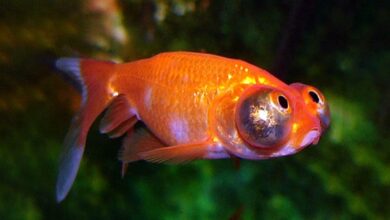
The most well-known stocking principle is the rule of 1 cm of fish per liter of water. However, this is a very rough estimate and leaves much room for error. It doesn’t account for modern filtration systems, whether there are live plants, proper lighting, or the type of fish the owner wants to keep. Like people, not all fish are the same size or shape. Stocking 10 cm-long danios in a few dozen liters of water is not the same as introducing 10 cm-long goldfish. Larger fish produce much more waste and therefore require more water and more efficient filtration.
Differences in Requirements
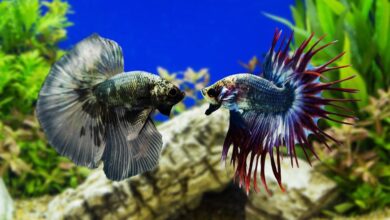
Different species have different needs. Fish from fast-moving rivers and streams prefer strong currents, which can only be created in a long tank. Other species thrive better in tanks with plenty of hiding spots and slow water movement, such as bettas or goldfish. Fish also need space to swim, some more than others. While the numbers may look fine on paper, in reality, the tank might be too small for the fish to swim properly, especially for active or surface-dwelling species. It’s also important to note that schooling fish should be kept in groups of at least 5-6. In a tank that’s too small, adding just one or two fish from these species can cause them stress, lower their immunity, and shorten their lifespan.
Age and Size
Additionally, fish are often not fully grown when brought home. A cute 3 cm catfish today could be 30 cm in just a few months and may still grow larger. When calculating the stocking of a tank, the adult size of the fish must be considered. However, many owners have no idea how old their fish are or how large they’ll become. It’s always important to research species to determine the actual adult size before buying fish. Good pet stores provide information about fish and advice on which species can be kept together. In the age of smartphones and the internet, information about fish sizes and their needs is always at your fingertips, even while standing in front of an aquarium shelf in a store.
Common Misconceptions in Tank Capacity Calculation
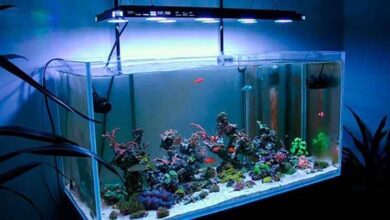
Another mistake is assuming that the size of the aquarium equals the amount of water it holds. A 54-liter aquarium (60 x 30 x 30 cm, measured from the outside edges of the glass) filled with gravel, rocks, plants, and decorations doesn’t hold 54 liters of water. In reality, the water volume is often 10-15% less than the tank’s rated size. While the “1 liter per 1 cm” rule is reasonable, it’s safer to allocate much more space per fish.
 Surface Area Matters
The larger the surface area of the water, the greater the oxygen exchange, which in turn allows more fish to be kept in the aquarium. Therefore, the size of the water’s surface directly affects how many fish can be kept. A tall, narrow tank may hold the same amount of water as a short, wide tank, but their surface areas are very different.
When using the surface area rule, you account for the difference in tank shapes. The surface area is calculated by multiplying the tank’s width by its length. According to the surface area principle, you can keep one centimeter of fish for every 15 square centimeters of surface area. However, this calculation has the same flaws as the “1 liter per 1 cm” rule—it assumes that the fish are relatively slender, which isn’t always the case. For broader fish, the calculation should be adjusted to one centimeter of fish per every 20 square centimeters of surface area. Like the centimeter rule, the surface area rule is not perfect, but it has the advantage of accounting for tanks with unusual shapes.
Pros and Cons
As a general measure for typical situations, the 1 cm rule works well, and it’s easy to calculate. If you use it, always consider the tank’s actual water capacity and the adult size and shape of the fish. For non-standard tanks, the surface area principle works better than the basic 1 cm rule. It’s always better to stock fewer fish than too many.
It’s important not to introduce too many fish at once into an existing aquarium. Fish waste is toxic to all inhabitants, but beneficial bacteria break it down regularly. These bacterial colonies need time to adapt to changes in the biological load. When introducing fish in stages, the bacteria have time to grow and break down the toxins in the fish waste.
Filtration Matters
Finally, it’s essential to remember that filtration also plays a major role in how many fish can live in the tank. The filter should process at least four times the tank’s capacity per hour.