How to Properly Light an Aquarium?
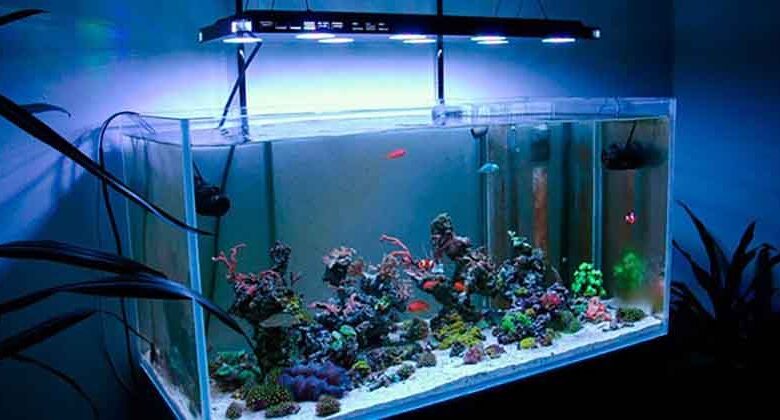
Lighting in an aquarium plays an extremely important role. It not only affects the aesthetics of the tank but, more importantly, it determines the living conditions of fish and plants. The type of lighting used influences the biological activity of the organisms inhabiting the aquarium, so it’s worth understanding the properties of different lights and the basic principles of aquarium illumination.
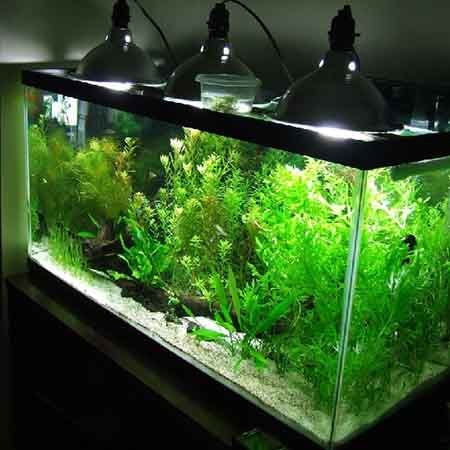 Aquarium Lighting – Why Is It Necessary?
It’s important to remember that lighting in an aquarium is essential. It helps create the proper conditions for the growth and well-being of both plants and fish. Light regulates processes such as photosynthesis, which controls the concentration of carbon dioxide in the water, and the biological processes of fish, such as spawning and feeding activity. Lighting also helps maintain a day and night cycle in the aquarium, impacting the well-being and health of its inhabitants.
How to Light an Aquarium – Basic Guidelines
The type of lighting, its color, and its intensity are crucial. Proper lighting parameters create ideal conditions for organisms’ growth while also enhancing the natural colors of fish and plants. Standard light bulbs are unsuitable for aquarium lighting because the wavelength of the light they emit is too short for effective plant photosynthesis. Moreover, such bulbs tend to heat up quickly, which could raise the aquarium’s water temperature, harming the organisms inside.
Aquariums should be lit for at least 10 hours per day. It’s best to do this at the same time each day to create a natural day-night cycle. Also, fish are sensitive to abrupt changes in light, so it’s a good idea to use modern lamps that can simulate dawn and dusk. This gradual light change helps fish and plants adapt to the surrounding environment.
Light Intensity and Temperature in the Aquarium
The light intensity depends on the depth of the tank and the species you’re cultivating. Optimal lighting power should be about 0.6 watts per liter of water, while in plant-based aquariums, it should be 0.8 watts per liter. Deeper tanks require brighter lighting because light waves may not reach the lower parts of the aquarium. In this case, LED lights or reflectors (aluminum hoods for fluorescent lamps) may be worth considering. These reflectors direct all the light downward, conserving energy in the process.
The color temperature of the light, specifically the wavelength emitted by the light, is also important for the growth of aquarium plants. The best results and plant coloration are achieved with blue light wavelengths in the 400–470 nm range and red light wavelengths in the 680–720 nm range.
The Most Common Types of Aquarium Lighting
T5 Fluorescent Tubes. This is one of the most popular ways to light an aquarium. It’s important to note that these tubes are different from standard ones found in electrical stores. Aquarium fluorescent tubes have different colors and special UVB and UVA filters that provide optimal conditions for plant growth while limiting the growth of bacteria and algae. There are two types of fluorescent tubes in stores – T8 and T5. The latter are newer, with a smaller diameter but greater power. They are more efficient and energy-saving, and with reflectors, the light can reach the lower parts of the tank. The power of a fluorescent tube in a regular aquarium should be about 0.5 watts per liter, while in a plant-based aquarium, it should be 1 watt per liter of water.
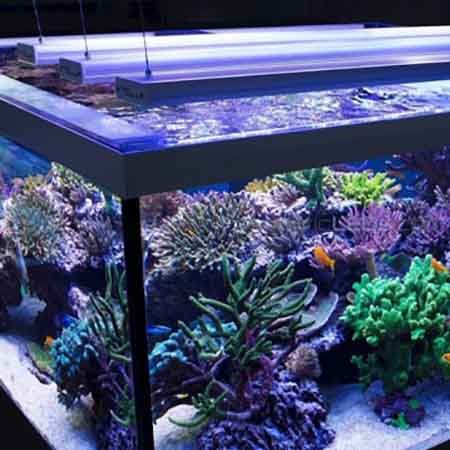 HQL and HQI Lamps. HQL lamps are especially recommended for plant aquariums. With their long lifespan and effectiveness for plants, they are mainly used in freshwater tanks. HQI lamps are more suitable for marine aquariums. Their light is stronger and more focused, making them ideal for tanks deeper than 50 cm. These lamps provide a light similar to sunlight. However, they emit a lot of heat, so they should be placed no closer than 15 cm above the water surface.
LED Lamps – The Most Modern Solution. LED lights are energy-efficient, highly effective, and economical. They also have a longer lifespan compared to fluorescent lamps, which need to be replaced annually. LED lamps come equipped with white, blue, and red diodes, allowing the light spectrum to be tailored to the needs of the plants. The only downside is the relatively high price, which quickly pays off in the form of lower electricity bills.