 All living organisms, including cats, have a natural need for water. Despite common myths about how domestic pets relate to water, hydration is essential for them, just as it is for all life on Earth. How much water a cat should drink is something we’ll explore further in this article.
Typically, animals are guided by instincts, and their need for food and water is regulated by natural mechanisms. So, there’s no need to be overly concerned, but knowing the daily water intake norms for cats can help owners monitor their pet’s health and wellbeing.
How much water should a cat drink per day to maintain normal bodily functions, what factors influence this, and what are the risks of dehydration? Let’s take a closer look.
Daily Water Requirement for Cats
On average, a cat should drink about 30 ml of water per kilogram of body weight each day. This is a general guideline. Larger animals may need proportionately less, while kittens, with faster metabolisms and active growth (up to one year of age), may require nearly twice as much—around 70 ml per kilogram of body weight.
A cat that is physically active or spends a lot of time outdoors will have a higher water requirement than one that spends up to 16 hours a day napping indoors. For pregnant or nursing females, water needs also increase due to factors like amniotic fluid and lactation. During mating or when searching for partners, cats may temporarily lose interest in food, water, and even sleep.
An animal’s health or stress levels can also affect its appetite for water and food, so it’s essential to monitor hydration, especially to prevent dehydration. Kittens have a critical dehydration limit of 12-24 hours, while adult cats may go up to three days—but it’s best not to let it reach this point.
Hot weather and indoor heating can increase a cat’s need for water. Cats sweat through their paw pads, which may even leave wet prints on hot days. They also lick their coats for evaporative cooling. During warm seasons or dry indoor months, it’s especially important to ensure they have access to fresh, cool water.
Diet and Water Quality
If a cat’s diet consists only of dry kibble, water intake from food is only about 10%. With a natural diet of meat, fish, or grains, around 70% of the cat’s hydration needs can be met through food.
For cats eating dry food, recommended water intake should be about twice the volume of food consumed. Water for cats should be clean and served in a fresh bowl. Tap water with chlorine, rust, or unpleasant odors may discourage drinking. Although outdoor cats may drink from puddles, which increases the risk of infections, it’s best to keep water bowls clean and wash them daily to encourage drinking.
 Risks of Dehydration in Cats
Dehydration can lead to:
- Cardiovascular issues
- Dry mucous membranes
- Reduced muscle mass
- Digestive problems
- Urinary, liver, and kidney diseases
- Poor skin and coat condition, even leading to bald spots
- Impaired thermoregulation
This is not a complete list of potential problems associated with low water intake in cats.
How to Monitor a Cat’s Water Intake
To measure your cat’s daily water intake, use a measuring cup to fill a bowl, noting the water level at the start of the day. Limit access to other sources of water, such as faucets, sinks, and toilets, to obtain an accurate measure. Track water levels each day to calculate an average intake.
If a cat drinks too little, try these strategies to encourage more water intake:
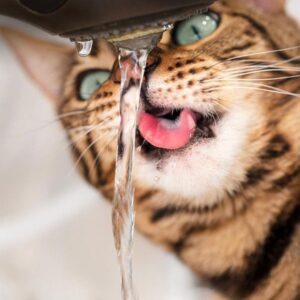
- Location and Type of Water Bowl: Place water bowls in multiple convenient spots, ideally raised, and avoid putting them near food or litter. If your cat prefers running water, consider a pet water fountain. Avoid plastic or metal bowls that might give off unpleasant odors.
- Flavored Water: Add a few drops of broth, milk, or vegetable juice (for veggie-lovers). Be cautious with flavored water, as it can spoil quickly.
- Ice Cubes: Drop an ice cube into the bowl to keep the water cool and make it more enticing. Cats may also play with it, licking water from their paws.
- Toy in the Water: For kittens and young cats, placing a small toy in the water can make drinking an interactive activity, with the cat licking water from its paws.
In conclusion, while nature often guides a cat’s hydration needs, understanding and monitoring your pet’s water intake can help detect potential health issues early. If there are serious concerns about a pet’s hydration, it’s essential to consult a veterinarian promptly. Don’t wait until the issue becomes severe.