Fleas or ticks on a dog

As we know, with the arrival of spring, everything comes to life: buds swell on the trees, the snow turns black and gradually retreats, and even the air acquires a special sweetness. However, with the warmth, some less pleasant creatures also awaken, such as fleas—a headache for many dog owners. These small parasites puncture the animal’s skin to suck blood, injecting toxic saliva that can cause significant discomfort for your pet, especially for those with allergic reactions to bites. In such cases, dogs may scratch the bite intensely, sometimes even drawing blood. Other dogs react less severely, but in any case, if you discover that your dog has been attacked by “jumping vampires,” you should get rid of them as quickly as possible before their population multiplies. Bite marks may also appear as small red bumps on the skin.
 How to tell if your dog has fleas?
Your pet will likely let you know first. Nervous and sudden scratching or furious biting at itself is the first sign that your dog has fleas. For short-haired breeds, spotting the problem is easy: fleas—small black insects—can be seen running across the surface of the fur. For long-haired breeds, it’s a bit trickier. To confirm that fleas are bothering your dog, check the favorite spots where they tend to hide—around the base of the ears, the upper part of the neck, the belly, and the inner sides of the hind legs.
Additionally, tiny specks resembling poppy seeds found in the dog’s fur can also indicate a flea problem. These specks are digested blood excreted by the fleas. To verify, place one of these specks on a clean white cloth. Within a minute, the area around the speck will turn pink—this is the dog’s partially digested blood.
How to combat this pesky parasite?
Today, the market offers a vast range of products that help deal with this issue. All of them are quite effective, quickly eliminating fleas, and come with detailed instructions on how to use them. One thing to remember is that not only your dog can harbor fleas; the parasites may also be found in your dog’s bedding and other places where your dog spends time.
What to do if your dog has fleas:
- Bathe your dog with a special flea shampoo, and treat its fur with a flea spray or powder.
- Treat bedding and all other objects your dog spends time with.
- Use a flea collar to prevent future infestations.
Keep in mind that all these treatments contain varying levels of toxicity, so prevent your dog from licking them, and ensure the active substances don’t get onto the dog’s food or toys. Carefully read the instructions, and pay close attention to the manufacturer’s warnings.
Your dog was bitten by a tick—what to do?
A more serious issue than fleas is a tick bite. Ticks also wake up with the onset of summer and remain active until late autumn. However, unlike fleas, a tick bite can cause more severe problems. Like fleas, ticks pierce the skin and suck the animal’s blood, causing itching and redness. However, tick saliva is much more dangerous than flea saliva, as it can transmit a range of serious diseases, the most common being piroplasmosis. This is one of the most severe blood diseases, and recognizing the symptoms early is critical to saving your pet. Statistics show that over a thousand dogs die annually from this disease.
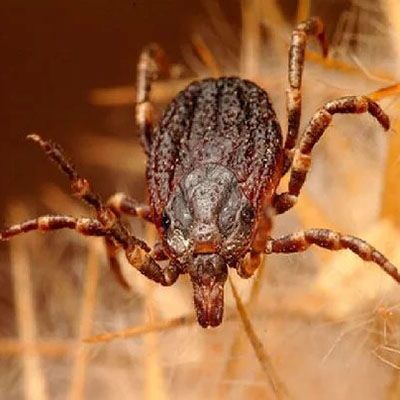 That’s why after every walk in the park, check your dog for ticks. Ticks are easy to find as they are larger than fleas. Depending on how long the tick has been attached and how much blood it has consumed, it may range from the size of a pea to being flat. Ticks latch onto the body much more securely than fleas, and simply pulling one off would be a mistake. Doing so would only remove the body, leaving the head inside the dog. It’s best to visit a vet to remove the tick, but if this isn’t possible, you can remove it yourself.
Contrary to popular belief, you should not pour oil on the tick. This could block its breathing pores and cause the tick to regurgitate the blood back into the wound, increasing the risk of infection. The easiest way to remove a tick is with medical tweezers. Grasp the tick as close to its mouthparts as possible and gently twist in either direction to remove it from the body. Usually, one to three twists are enough to remove the tick completely, including the mouthparts. If the head remains, it can also be extracted similarly. If tweezers aren’t available, a regular thread can be used to loop around the tick, and gentle rocking will remove it. Once removed, clean the wound with an antiseptic. There are also special tools available for tick removal, which make the process even easier. If done correctly, the wound will heal within a week.
In conclusion:
Fleas and ticks are some of the most common creatures on the planet. Today, over 2,380 species of fleas are known, and more than 48,000 species of ticks have been described! If you want to avoid the “joy” of getting too familiar with these animals, just follow a few simple rules:
- Before a walk, treat your pet with flea and tick repellents (and ensure the product has not expired).
- Treat the places where your dog spends time (kennel, mat, couch).
- If you’re planning a long trip to nature, use a flea collar.
- Check your dog after every return from the woods.
When buying flea or tick treatments, it’s best to choose well-known brands. Using low-quality products from unknown manufacturers could cause an allergic reaction in your pet, or even lead to hair loss. Additionally, when choosing a product, consider your pet’s weight. Remember, all these treatments are toxic to some degree, so avoid using them for extended periods.