How to Stop a Dog from Chewing Shoes?
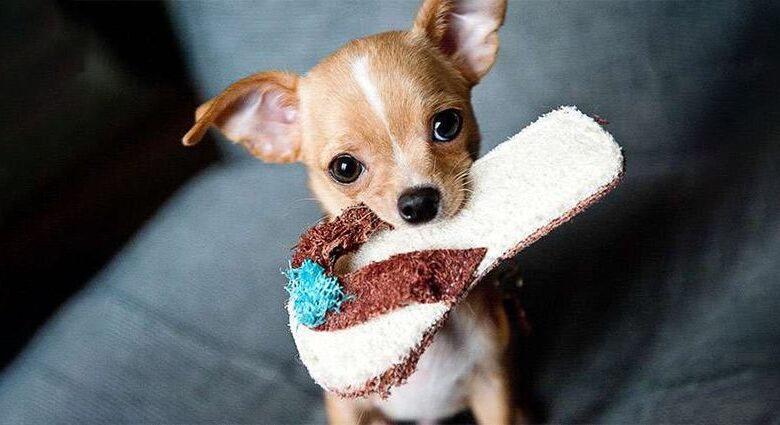
Four-legged pets seem completely indifferent to the aesthetic qualities of your shoes. From their point of view, it’s very simple: their owner’s shoes are perfect for chewing. They are firm enough and, at the same time, soaked with the familiar scent of their beloved owner – no wonder they often become the victims of a dog’s teeth.
What should you do if your pet, driven by destructive tendencies, takes a liking to your shoes?
Why does a dog chew on shoes?
Biting is one of the most natural forms of behavior for dogs, and it’s also a remedy for many problems and stresses. It’s a great way to massage the gums, fight boredom, or relieve stress. Dogs of all ages need to chew, though not all to the same degree. It’s especially important for puppies and young dogs, around 4-5 months old. At around this age, their permanent teeth are coming in, causing a strong need to chew. Puppies then recklessly reach for anything within the range of their mouths. If the puppy chooses your shoes, they will quickly realize that it’s an excellent teething tool, which can easily lead to a bad habit. Adult dogs, who are often bored, sometimes look for entertainment on their own. This is how they often come across something as interesting as your shoes, which are hard to resist. If your pet starts chewing shoes in front of you, it might also be trying to get attention and engage you in a ‘scolding’ game. Intense chewing can also be related to stress.
Four-legged friends may use it to reduce anxiety caused, for example, by separation from their owner. Pets suffering from separation anxiety often choose their owner’s items (like shoes), as the scent calms their mind.
Step one: Don’t let your dog chew on your shoes
Restricting access to shoes may seem like a simple tip, but it’s actually one of the most effective ways to tame your shoe-loving pet. Many dogs chew on whatever is nearby. If you hide all your shoes carefully, your pet simply won’t have the chance to chew them. It’s also important to keep an eye on curious puppies who will dig out shoes from anywhere. If, despite your best efforts, you catch your pet in the act, you should react appropriately. Chewing should be immediately stopped with a loud sound (a squeaky toy or whistle), and then redirect the dog’s attention to another activity (like following commands).
To prevent your pet from reaching for forbidden items during your absence, you can also train them to rest in a crate. It’s important to remember that even old, worn-out shoes should never be used as toys for dogs. Whether new or old, your four-legged friend won’t know the difference in the future.
Step two: Discourage the dog from chewing on shoes
If your pet has a strong habit of chewing shoes, try to discourage it. The best approach is to convince your dog that chewing shoes is simply unpleasant. For this, you can spray the shoes with a special protective spray that has a bitter or sharp taste. Then, give your dog the chance to chew on the shoes. Usually, placing them in a visible spot will do. Many dogs will not be drawn to flavorless items.
Step three: Provide appropriate chew toys
Simply discouraging your dog from chewing on shoes won’t solve the problem. You can’t forget that your pet had a reason to reach for them, so they still have a strong motivation to chew. Therefore, it’s necessary to provide your pet with something that effectively replaces your shoes. Your dog should have constant access to appropriate and varied chew items.
You can give your pet natural chew treats (like beef). Toys are also crucial for developing good habits. Rubber accessories with special attachments that massage the gums are great for chewing.
It’s ideal if you can hide dog treats inside them. Don’t forget to rotate your dog’s chew toys from time to time. For dogs suffering from separation anxiety, chewing alone won’t be enough. Such pets will need behavioral therapy. However, to temporarily ease their anxiety, you can leave them with another item, less valuable than shoes, but soaked in your scent.
Step four: Keep your dog occupied and mentally stimulated
Pets full of energy, left without engaging activities, are more likely to chew on objects. Therefore, it’s important to make sure your dog gets an appropriate dose of physical and mental exercise. During walks, they should have the chance to run, play, and explore. And when they’re home alone, they need other distractions. Searching for hidden objects, solving dog puzzles with interactive toys, and scent games will help your pet stay away from your shoes.