American Bullfrog
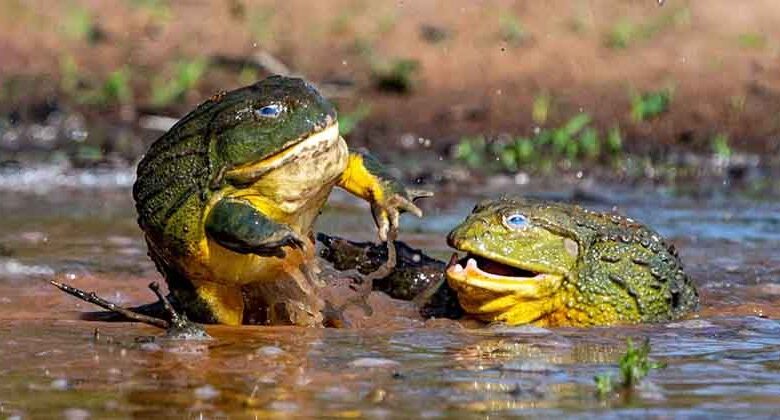
Many exotic animal enthusiasts keep amphibians as pets. However, we must be aware of the risks associated with these animals. They can reproduce quickly and compete with many native species in almost any environment. An example of such an animal is the American bullfrog.
This frog originates from North America, but it has managed to establish itself in other parts of the Americas, as well as in Asia and Europe. It is considered one of the top 100 most aggressive invasive species in the world.
 The Large Amphibian – The Bullfrog
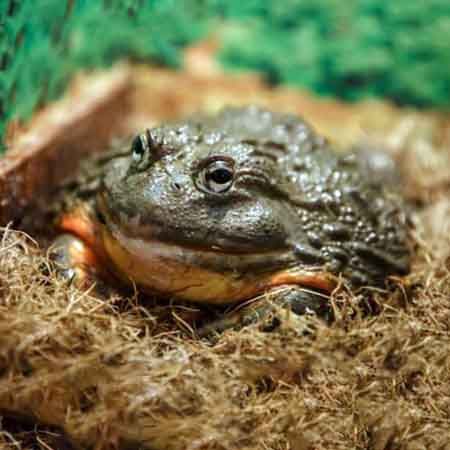
One of the most remarkable aspects of this animal is its large size, with adults reaching between 10 and 20 cm in length. Additionally, larger specimens can weigh up to one kilogram (2 pounds).
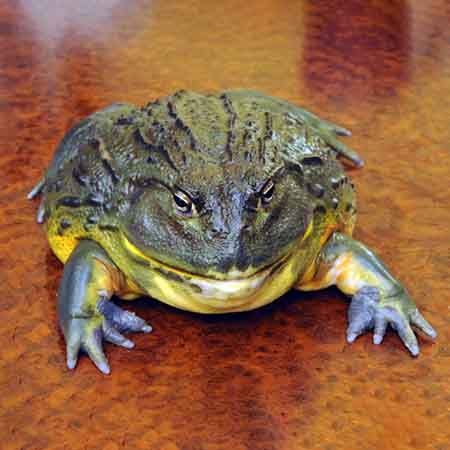
The American bullfrog has an olive-green pigment, with greenish or brownish spots. Its head is wide and flat, with a fold near each eye. A key characteristic for distinguishing between the sexes is the size of the eardrum, which is much larger in males. Its belly is whitish and speckled with dark spots, and its hind legs have dark stripes.
An Invasive Species
Invasive species have the ability to settle in a wide range of habitats and feed on a variety of species. This is the secret to their success, and the bullfrog certainly thrives as an invasive species.
Wide Range of Tolerable Temperatures
Bullfrogs become active when water temperatures exceed 15°C (59°F). At temperatures below 1°C (34°F), their motor activity is impaired. In their natural habitat, they remain in water temperatures between 24°C and 33°C (75°F and 91°F) and in ambient temperatures ranging between 26°C and 42°C (79°F-108°F), with relative humidity between 33% and 100%.
High Egg Production
The breeding season for the American bullfrog is typically in spring and summer. Females can lay around 20,000 eggs per clutch, but this number can reach up to 40,000. If environmental conditions are favorable, these frogs can lay eggs several times a year. The eggs hatch in about three to five days, and tadpoles, which can grow up to 20 cm in length, can undergo metamorphosis in just six months in warm water.
Adaptability
This animal adjusts its diet based on the prey available in its environment. The bullfrog feeds on all types of invertebrates, whether terrestrial, aquatic, or flying, as well as vertebrates that come close enough.
The frog hunts by staying still and camouflaged within the surrounding vegetation. Its greatest advantage is not speed but cunning: as soon as its prey passes by, it pounces. The bullfrog can swallow fish, tadpoles, marine turtles, small snakes, as well as rats and bats that come to the pond to quench their thirst. Its feeding capacity is so great that the frog can survive a long period of starvation after a heavy meal.
Bullfrog tadpoles are generally herbivores, but stomach content analysis has revealed fecal matter and other organic debris, as well as small aquatic invertebrates. It seems that, like their parents, they consume anything that fits in their mouths.
Hardiness
The bullfrog can inhabit any type of still water environment, especially those rich in abundant foliage and decaying plant matter. Additionally, American bullfrogs tolerate relatively high levels of pollution, allowing them to live in human-impacted areas. Some experts even suggest that these species prefer ‘artificial ecosystems.’
 The Threat of the Bullfrog as an Invasive Species
All of these factors make the American bullfrog one of the most successful invasive species. They have great potential to settle in a wide variety of ecosystems.
Furthermore, invasive species introduce another problem—disease transmission. The American bullfrog can carry fungi, bacteria, and viruses—pathogens that can severely impact the health of other animals and humans.
Several programs have been launched to control and eradicate this invasive species in the wild. This plan includes public awareness measures, particularly targeting exotic animal enthusiasts.