Norwegian Forest Cat
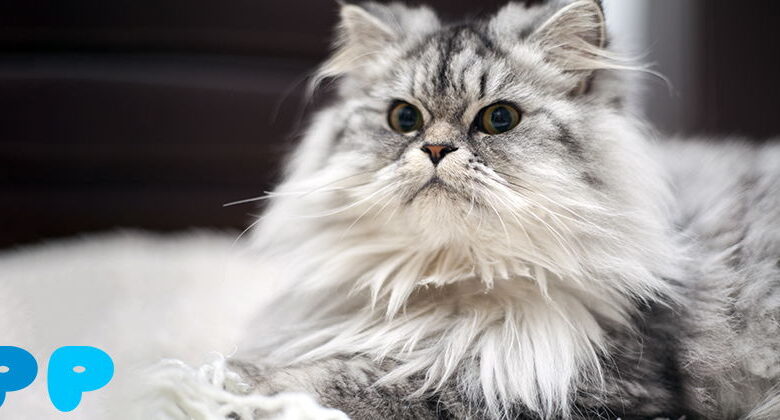
The Norwegian Forest Cat is a natural breed from Norway, developed without human intervention. It impresses with its appearance and character.
 Breed Description
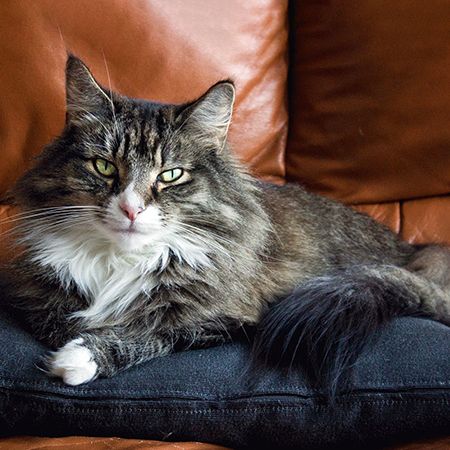
The Norwegian Forest Cat belongs to the group of semi-long-haired breeds. Its double-layered coat consists of a waterproof undercoat and a long outer layer, designed for harsh climates. This breed’s coat adapts to seasonal changes: the winter fur, with its dense undercoat, is soft and warm, providing protection during cold winters. Like other long-haired cats, even the paws have fluffy tufts of fur. During summer, the Norwegian Forest Cat sheds much of its fur but retains its bushy tail and “snow boots” on its paws—tufts between the paw pads.
The coat’s texture differs from that of other breeds. Its waterproof outer layer is slightly oily and heavy, giving it a shaggy, less silky appearance compared to Maine Coons. Norwegian Forest Cats are adapted to temperatures as low as -30°C and heavy rain.
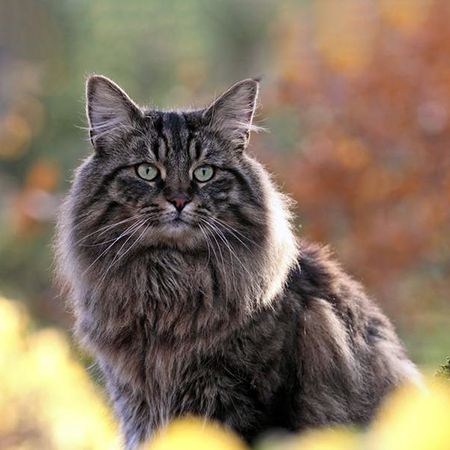
This is a large breed, reaching full size at around three to four years old, with adults weighing up to 8 kg (17.6 lbs). According to breed standards, the Norwegian Forest Cat has a triangular face, high-set ears with inner tufts of fur and often lynx-like tips.
The breed’s coat color can include any domestic cat patterns, often paired with white. Whether spotted, tabby, black, or blue, their coats are always a visual delight.
Temperament
Known as “gentle giants,” Norwegian Forest Cats are friendly, peaceful, and affectionate despite their large size. They form strong bonds with their human companions and are highly social animals, coexisting happily with other cats, small pets, and even dogs.
Thanks to their muscular build and long limbs, Norwegian Forest Cats are skilled climbers and jumpers. They enjoy playtime and thrive with interactive toys, scratching posts, and climbing trees. Their playful curiosity extends to intellectual games, making them excellent companions for families with children. Their sociable nature makes them unsuitable for being left alone—getting two cats from a reputable breeder is often recommended.
History
The Norwegian Forest Cat is considered a “natural” breed, developed through natural selection without human interference. As a result, they are well-adapted to the harsh climates of their native Scandinavia, with thick, water-resistant coats suited for snowy winters.
Known in Norway as “Norsk Skogkatt,” these cats began their careers as rodent hunters on farms, guarding barns and livestock stalls. How these long-haired cats originally appeared remains unclear, but it is theorized that sailors brought Persian cats as mascots on their voyages, which then bred with local cats.
 Despite crossbreeding with short-haired cats, the gene for long fur was passed down. Occasionally, long-haired kittens appeared in litters of short-haired parents, forming the basis for the breed’s formal development in the 1930s.
The Norwegian Forest Cat was first exhibited in Oslo in 1938. However, breeding programs were interrupted by World War II and resumed in the 1970s. In 1972, Norwegian cat breeder associations officially recognized the breed and developed a standard. By 1975, the first Norwegian Forest Cats were registered with the Fédération Internationale Féline (FIFe).
Care
As a hardy, primitive breed, Norwegian Forest Cats do not require excessive maintenance. They are happy to enjoy a secure balcony or garden. A scratching post is essential, allowing them to exercise their climbing instincts without damaging furniture or curtains.
Their robust coats are generally self-maintaining, but weekly brushing is advised to prevent matting, especially in the soft undercoat. Early training for dental care can make grooming easier. During shedding seasons, malt paste or cat grass helps naturally remove ingested fur.
Health
Being a natural breed, Norwegian Forest Cats generally experience fewer reproductive issues like miscarriages or premature births. However, they are predisposed to certain genetic conditions, such as:
- Hypertrophic Cardiomyopathy (HCM): A heart disease characterized by the thickening of the left ventricular wall. Regular ultrasounds can detect this hereditary condition early, allowing for treatment to improve the cat’s quality and length of life.
- Glycogen Storage Disease Type IV (Andersen’s Disease): This rare autosomal recessive condition is often diagnosed late. A cat carrying one defective gene is asymptomatic but can pass the trait to offspring. Cats inheriting the gene from both parents develop severe symptoms, including multi-organ failure, and have a short lifespan of 10–14 months.
Responsible breeders conduct regular health checks and exclude affected animals from breeding programs.
 Nutrition
Norwegian Forest Cats require a diet rich in fresh meat and proteins. High-quality commercial foods can meet their needs but check ingredient labels carefully. Meat should be the primary ingredient, and avoid by-products, plant fillers, sugars, or artificial additives.
Breeding
Genetic conditions like HCM and Andersen’s Disease highlight the importance of responsible breeding. Reputable breeders prioritize the health of their cats, conducting regular veterinary exams, providing proper nutrition, and ensuring genetic diversity.
Avoid buying cats advertised at suspiciously low prices, as responsible breeding is costly. Trustworthy breeders invest in health screenings, vaccinations, deworming, and early socialization to raise well-adjusted kittens.
Note: Norwegian Forest Cats are social animals and should never be kept alone!